
THE TIMES
RUNNING FOR THE HUMAN RACE
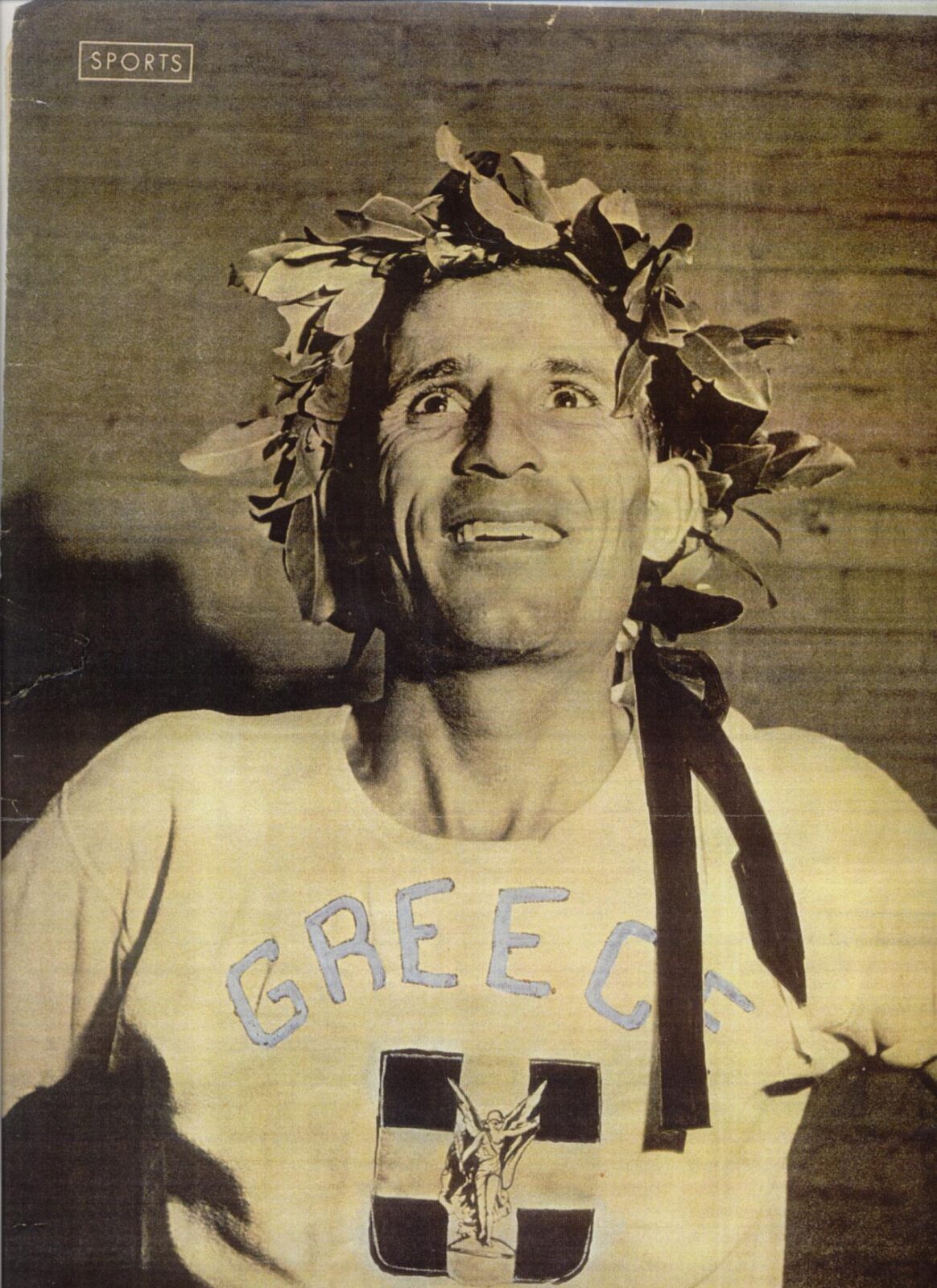
The decades of the 1930, 1940 and 1950
For one to understand the life, achievements and legacy of Stylianos (Stelios) Kyriakides, it is necessary to first understand the conditions that the world, and especially Greece, was in, during the decades of the 1930s and 1940s but also the 1950s
The decade of the 1930s
The 1930s was a decade that began on January 1, 1930 and ended on December 31, 1939. In the United States, the Dust Bowl led to the nickname the "Dirty Thirties". The decade was defined by a global economic and political crisis that culminated in the Second World War. It saw the collapse of the international financial system, beginning with the Wall Street Crash of 1929, the largest stock market crash in American history. The subsequent economic downfall called the Great Depression, had traumatic social effects worldwide, leading to widespread poverty and unemployment, especially in the economic superpower of the United States and in Germany, which was already struggling with the payment of reparations for the First World War. The Dust Bowl in the United States (which led to the nickname the "Dirty Thirties") exacerbated the scarcity of wealth. U.S. President Franklin D. Roosevelt, who took office in 1933, introduced a program of broad-scale social reforms and stimulus plans called the New Deal in response to the crisis. The Soviet's second five-year plan gave heavy industry top priority, putting the Soviet Union not far behind Germany as one of the major steel-producing countries of the world, while also improving communications. First-wave feminism made advances, with women gaining the right to vote in South Africa (1930, whites only), Brazil (1933), and Cuba (1933).
Following the rise of Adolf Hitler and the emergence of the NSDAP as the country's sole legal party in 1933, Germany imposed a series of laws that discriminated against Jews and other ethnic minorities.
Germany adopted an aggressive foreign policy, remilitarizing the Rhineland (1936), and annexing Austria (1938) and the Sudetenland (1938), before invading Poland (1939) and starting World War II near the end of the decade. Italy likewise continued its already aggressive foreign policy, defeating the Libyan resistance (1932) before invading Ethiopia (1935) and then Albania (1939). Both Germany and Italy became involved in the Spanish Civil War, supporting the eventually victorious Nationalists led by Francisco Franco against the Republicans, who were in turn supported by the Soviet Union. The Chinese Civil War was halted due to the need to confront Japanese imperial ambitions, with the Kuomintang and the Chinese Communist Party forming a Second United Front to fight Japan in the Second Sino-Japanese War. Lesser conflicts included interstate wars such as the Colombia–Peru War (1932–1933), the Chaco War (1932–1935) , and the Saudi–Yemeni War (1934), as well as internal conflicts in Brazil (1932), Ecuador (1932), El Salvador (1932), Austria (1934) and British Palestine (1936–1939).
Severe famine took place in the major grain-producing areas of the Soviet Union between 1930 and 1933, leading to 5.7 to 8.7 million deaths. Major contributing factors to the famine include: the forced collectivization in the Soviet Union of agriculture as a part of the First Five-Year Plan, forced grain procurement, combined with rapid industrialization, a decreasing agricultural workforce, and several severe droughts. A famine of similar scope also took place in China from 1936 to 1937, killing 5 million people. The 1931 China floods caused 422,499–4,000,000 deaths. Major earthquakes of this decade include the 1935 Quetta earthquake (30,000–60,000 deaths) and the 1939 Erzincan earthquake (32,700–32,968 deaths).
The world population increased from 2.05 to 2.25 billion people during the decade, with about 750 million births and 550 million deaths.
STYLIANOS KYRIAKIDES
HIGHLIGHTS
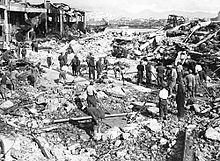
1943 Occupation
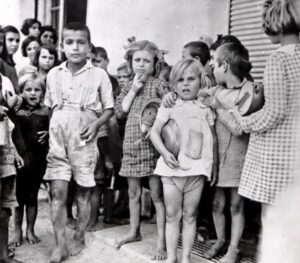
1945 hungry children
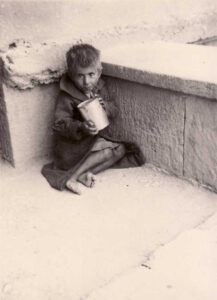
1946 homeless child
The decade of the 1940’s
-
World war II from 1940 -1945
Greece refused to surrender to the Germans and Italians and declared war in October 1940. They resisted the Italian advance for 6 months and was defeated in the end by the Germans who occupied the country from in April 1941. Things progressed from bad to worse until the Greek resistance defeated the Germans who started leaving Greece in December 1944. But the worst was yet to come
-
The Greek civil war 1945 - 1949
The Greek Civil War took place from early 1945 to September 1949. The conflict, which erupted shortly after the end of World War II, consisted of a communist-dominated uprising against the established government of the Kingdom of Greece. The opposition declared a people's republic, the Provisional Democratic Government of Greece, which was governed by the Communist Party of Greece (KKE) and its military branch, the Democratic Army of Greece (DSE). The rebels were supported by Yugoslavia and the Soviet Union. With the support of the United Kingdom and United States, the Greek government forces ultimately prevailed.
The war had its roots in divisions within Greece during World War II between the communist-dominated left-wing resistance organization, the EAM-ELAS, and loosely-allied anti-communist resistance forces. It later escalated into a major civil war between the Greek state and the communists. Fighting resulted in the defeat of the DSE by the Hellenic Army.
The war resulted from a highly-polarized struggle between left and right ideologies that started when each side targeted the power vacuum resulting from the end of Axis occupation (1941–1944) during World War II. The struggle was the first proxy conflict of the Cold War and represents the first example of postwar involvement on the part of the Allies in the internal affairs of a foreign country, an implementation of the containment policy suggested by George F. Kennan in his Long Telegram of February 1946.
The Greek royal government in the end was funded by the United States (through the Truman Doctrine of 1947 and the Marshall Plan of 1948) and joined NATO (1952)
The decade of the 1950’s
In the 1950s, Greece was undergoing significant social, political, and economic changes following the end of World War II and the Greek Civil War (1946-1949). Many Greeks emigrated to the USA, Brazil, Argentina, South Africa, Australia, Sweden, and Germany and Greece was left without the necessary manpower to rebuild.
Here are some key aspects of what Greece was like in the 1950s:
- Reconstruction and Recovery: The 1950s marked a period of reconstruction and recovery for Greece after the devastation of World War II and the Civil War. The country had to rebuild its infrastructure, economy, and society.
- Political Situation: The 1950s in Greece were characterized by political instability and polarization. The country was recovering from the Civil War, and there were ongoing tensions between the conservative and liberal factions. The monarchy was restored in 1946, and Greece experienced a series of political crises and changes in government during this period.
- Economic Development: The 1950s saw some economic growth in Greece, supported by the Marshall Plan aid from the United States. The Greek government implemented reforms to modernize the economy and attract foreign investment. Agriculture remained an important sector, but there were efforts to industrialize and diversify the economy.
- Urbanization: The 1950s witnessed a significant increase in urbanization in Greece, with many people moving from rural areas to cities in search of better opportunities. This led to the growth of urban centers and changes in the social fabric of the country.
- Cultural Revival: The 1950s were also a period of cultural revival in Greece, with a renewed interest in traditional Greek music, art, and literature. This period saw the emergence of notable Greek artists, writers, and intellectuals who played a key role in shaping the cultural landscape of the country.
- Tourism: The 1950s marked the beginning of Greece's tourism industry as the country started to attract visitors from around the world to its beautiful landscapes, ancient ruins, and picturesque islands. Tourism became an important sector of the Greek economy and continues to be a major source of revenue for the country.
Overall, the 1950s were a time of transition and rebuilding for Greece as the country sought to recover from the effects of war and civil conflict and set the stage for future development and growth.
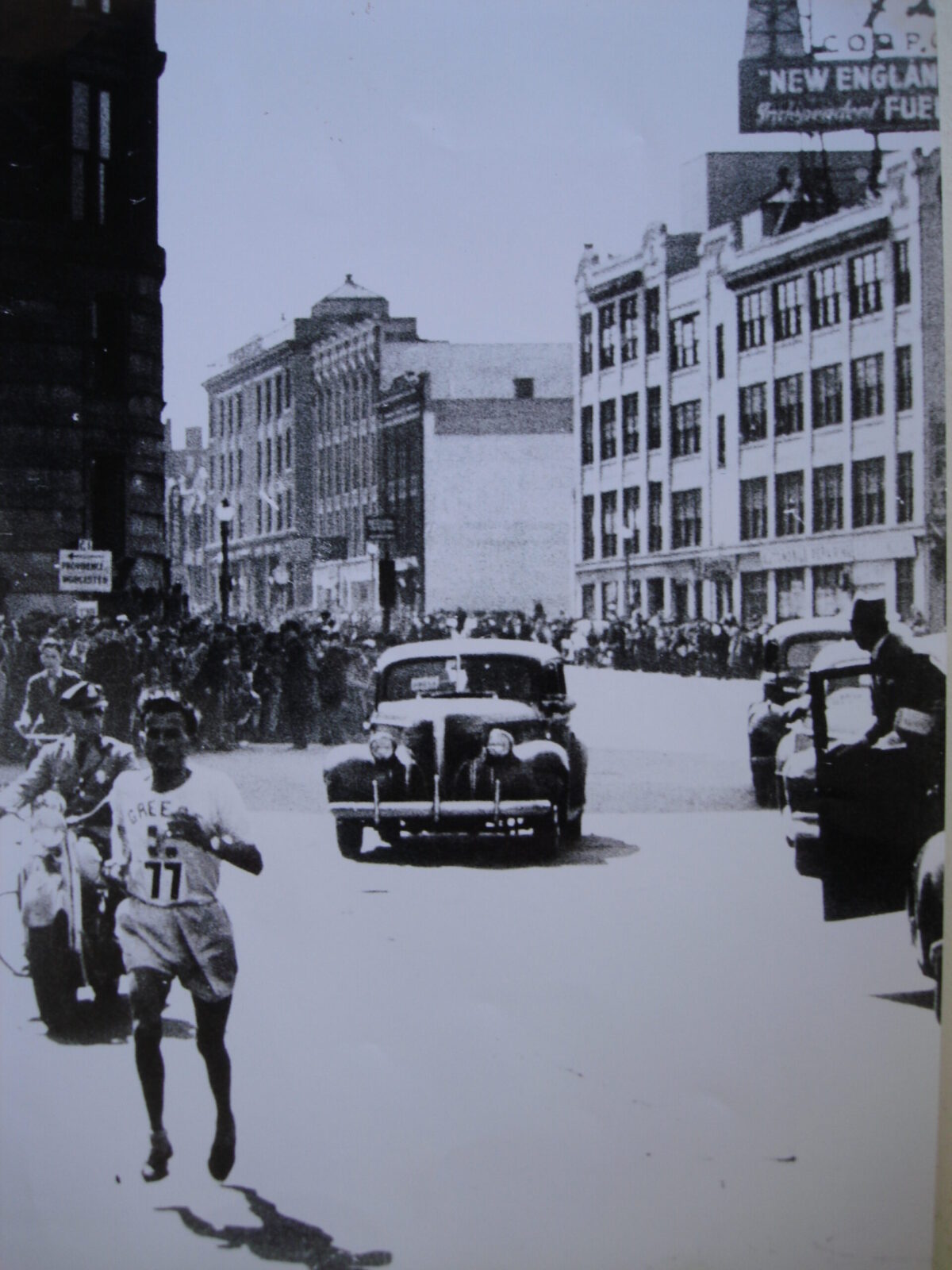
Stylianos Kyriakides helped to revive Greece track and field events, and he also organized the ATHENS INTERNATIONAL MARATHON in 1955 that took place every two years. All the top European runners took part as well as BIKILA ABEBE in 1961
He also helped to revive the “Boy scout” movement in Greece and was awarded in 1960 the “GOLD IEROVILO” by the Scout president King Paul of Greece. He also assisted in organizing two international Scout Jamboree’s with about 10,000 scouts attending each one, from all over the world.